The setting
Mombasa Old Town and the Swahili coast around the fort
Mji wa Kale's streets, the coral-stone building tradition of the coast and the carved doors to look for before the show.
Choose a show night ↗Quick answer
Fort Jesus stands at the edge of Mji wa Kale, Mombasa's Old Town, on the south-east side of Mombasa Island beside Tudor Creek. The Old Town is mostly Swahili in its building, part of a coastal tradition that worked in coral stone and is known for its carved doors.
Mji wa Kale
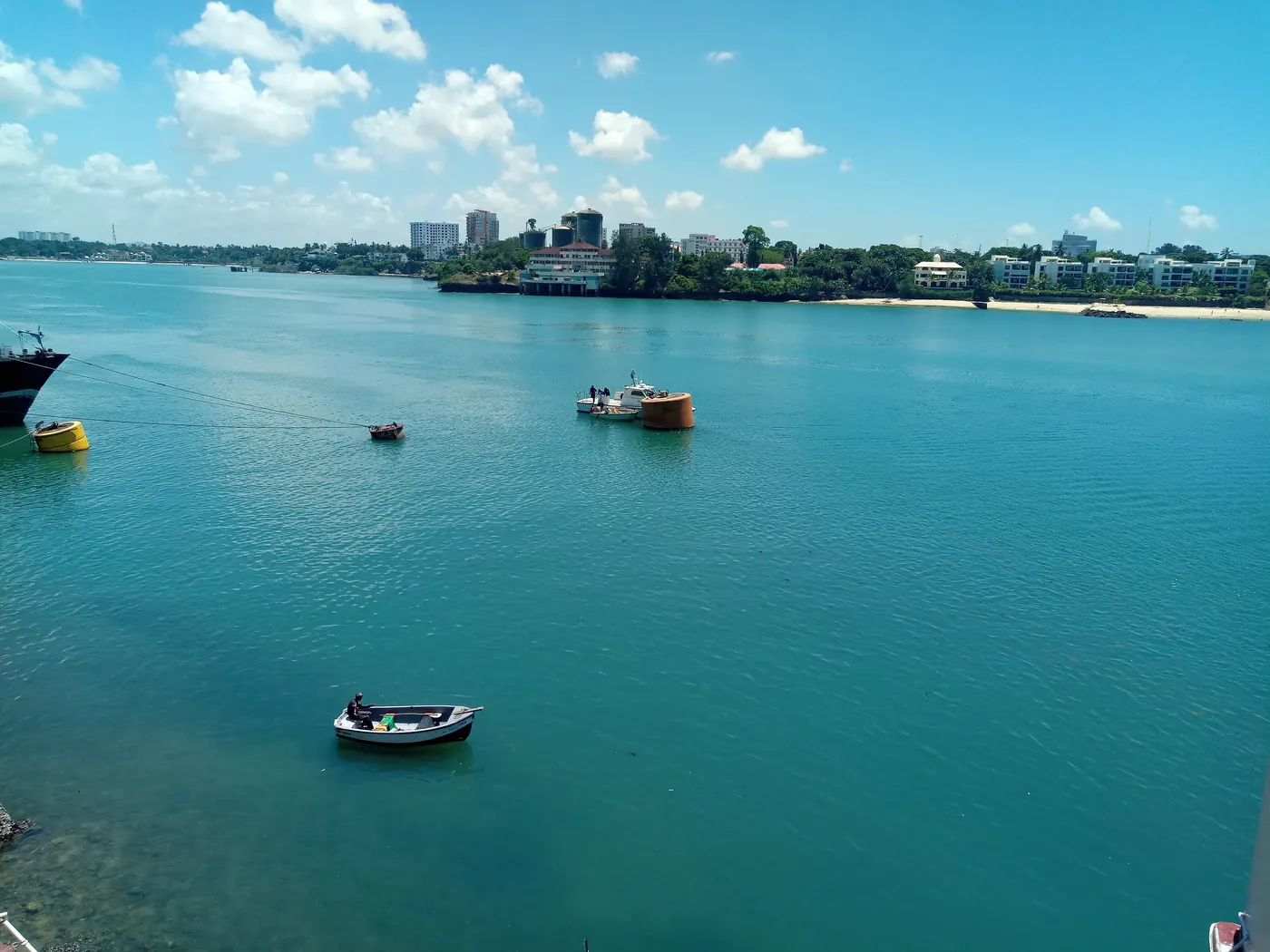
Mombasa's Old Town is also called Mji wa Kale, Swahili for old town, Wikipedia says. It covers 72 hectares on the south-east side of Mombasa Island, beside Tudor Creek, and is home to a mix of Swahili, Arab, Persian, Indian, Portuguese and British communities. In 1997 the National Museums of Kenya put the Old Town and Fort Jesus forward together for UNESCO's World Heritage list; the fort was inscribed in 2011.
What the buildings tell you
Most buildings in the Old Town are Swahili, Wikipedia says, while many others show the influence of Mombasa's trade and its foreign occupiers, including Portuguese colonial styles from the 16th century and later Islamic architecture. Walking in before the show, you pass houses with deep wooden balconies, narrow lanes and small shops, all within a few streets of the fort's walls.
Building in coral
Wikipedia's article on Swahili architecture calls local coral limestone the signature material of the coast, used with coral rag and mangrove poles. Typical Swahili building can still be seen in Mombasa, Lamu and Malindi in Kenya, and in Songo Mnara, Kilwa Kisiwani and Zanzibar in Tanzania. Fort Jesus itself, Wikipedia notes, was built with masonry techniques, materials and labour believed to have come from the local Swahili people.
The carved doors
The best-known feature of Swahili architecture is the carved door, Wikipedia says. Older doors have rectangular frames with straight lintels; arched lintels became more common in the later 19th century. The centre of the lintel often carries a carved Arabic inscription, such as a verse from the Quran or details of the householder. Look out for them in the Old Town on the way to the fort.
The wider coast
The Swahili coast, in Wikipedia's description, takes in places from Sofala in Mozambique to Lamu and Pate Island in Kenya, along with islands such as Zanzibar and the Comoros. Its towns grew rich on trade carried by the yearly monsoon winds, and its people, the Swahili, formed a culture from African and Arab origins. Mombasa is one of its great ports, and Fort Jesus is the best place to see how outside powers tried to control it.
Frequently asked questions
Is the Old Town worth seeing before the show?
Yes. The fort stands at its edge, so an afternoon in its streets leads naturally to the evening.
Sources